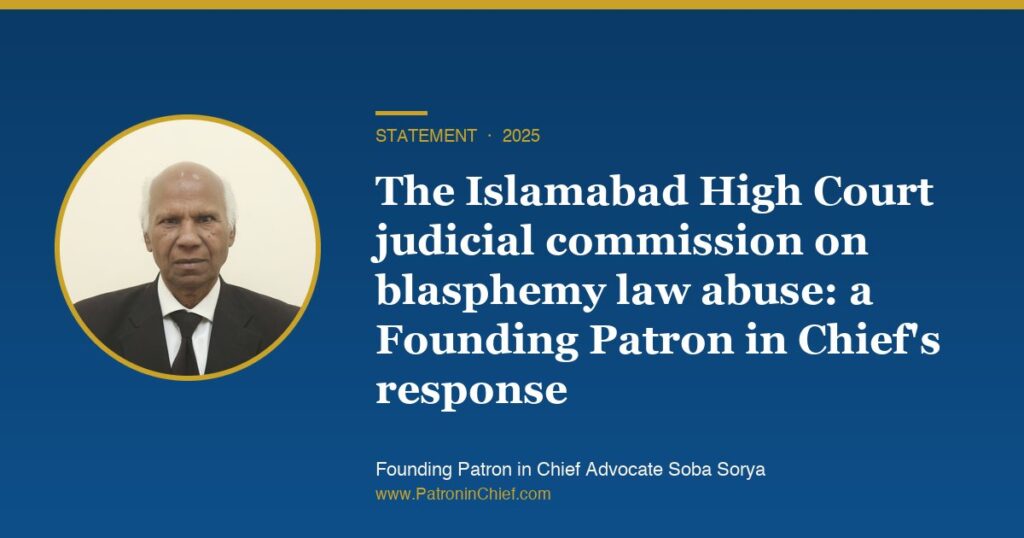
In July 2025 the Islamabad High Court constituted a judicial commission to examine the misuse of the blasphemy laws. As Founding Patron in Chief of Christian Lawyers Alliance Pakistan (CLAP), I welcomed the decision at once, and I want to explain calmly why, and what the Alliance intends to place before the commission.
I have practised in the courts of Punjab since 1982. In that time I have seen sections 295 and 298 of the Pakistan Penal Code used to settle a property dispute, to remove a rival from a job, to punish a young man who refused a demand, and to drive a family from its village. I have also seen the accused acquitted after years in prison, with no consequence for the accuser. A judicial commission, sitting under the authority of a High Court, is the first serious opportunity in years to look at this pattern as a whole rather than case by case.
What the commission should examine
- How complaints are registered: whether the police examine the allegation before recording an FIR, or record it because a crowd demands it.
- The gap between accusation and trial: how long the accused waits in custody, how often bail is refused because of pressure rather than evidence, and how many cases end in acquittal.
- The fate of the accuser: whether the law on false complaints is ever applied when an accusation collapses.
- The role of the crowd: who gathers it, who addresses it, and why the police so often arrive after the damage is done.
- The safety of judges, lawyers and witnesses, without which no honest trial is possible.
What CLAP will submit
The Alliance has, since 2020, kept careful files on the blasphemy and forced conversion cases in which our Christian lawyers in Pakistan have appeared. We will place those files before the commission, with the names of clients removed where safety requires, so that the judges see the pattern from the inside: the first night, the FIR, the bail hearings, the years of waiting, and what happened to the family afterwards. We will also submit the accounts we have documented and translated for Pakistani Christians who fled to Thailand, Malaysia and Sri Lanka, because the commission should know what the misuse of these laws costs the country in its own citizens.
I say this as a friend of the court. The Constitution of Pakistan guarantees equality before the law and freedom of religion to every citizen, and the commission is the state examining its own conduct against that promise. Our part is to bring the evidence honestly, in the proper forum, and to pray for wisdom for those who will read it. Isaiah 1:17 tells us to seek justice and defend the oppressed; a commission that does so serves the whole nation. Details of our work are at clap.com.pk.
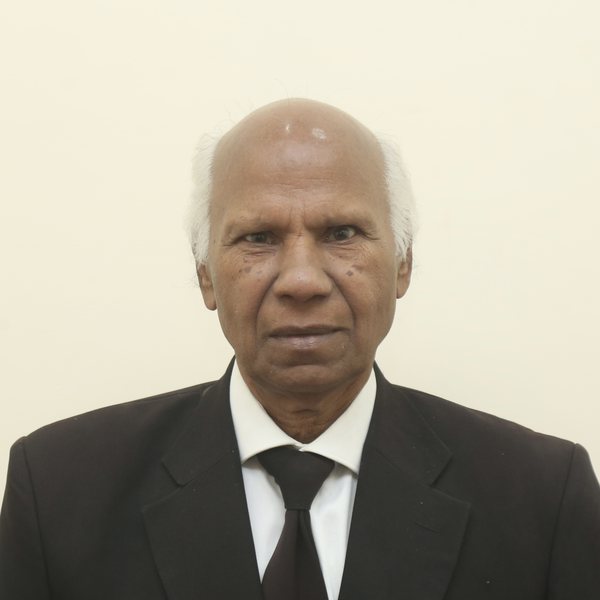
— Founding Patron in Chief Advocate Soba Sorya, Senior Advocate High Court, Christian Lawyers Alliance Pakistan (CLAP)