In May 2024 a rumour spread in Sargodha, and within hours a mob attacked a Christian family and their neighbours. I have read the accounts and spoken with colleagues, and as Founding Patron in Chief of Christian Lawyers Alliance Pakistan (CLAP) I want to name the pattern plainly, because a pattern that is named can be broken.
The pattern has three parts. First, a rumour: a word spoken, a page found, a quarrel remembered. Second, a crowd, gathered by loudspeaker or by telephone, that arrives with fuel and sticks. Third, the police, who arrive too late. Jaranwala in August 2023 followed this pattern. Sargodha in May 2024 followed it again. The details differ; the sequence does not.
Why the pattern repeats
It repeats because the accusation is never tested before the punishment is delivered. Sections 295 and 298 of the Pakistan Penal Code are meant to be enforced by the state, through an FIR, an investigation, a charge and a trial. The mob replaces all four steps with one. If the state then registers a case against the Christian victim rather than against the attackers, it tells the next crowd that the pattern works.
It also repeats because the victims are poor and unrepresented. A family whose home has just been burned does not know that it may file its own FIR, that it may ask the court for protection, or that a writ petition can compel the police to act. The attackers, by contrast, often have friends at the police station.
What Christian lawyers in Pakistan ask
We do not ask for special treatment. We ask that the Constitution of Pakistan, which guarantees equality before the law and freedom of religion to every citizen, be applied on an afternoon in Sargodha as it is applied in a courtroom in Lahore. In practical terms this means four things: police who move when the loudspeaker sounds, not after the fire; an FIR against the attackers registered on the victim’s complaint; protection for the injured family and the witnesses; and a fair, prompt examination of whatever accusation began the violence, with bail for the accused when the evidence is weak.
Pakistani Christian lawyers cannot stop a crowd. But CLAP can stand with the family the next morning, take their statement, register the case and go to the High Court if the police do not. We do this without charge, and our details are at clap.com.pk.
Micah 6:8 asks us to do justice, to love mercy and to walk humbly with our God. We ask for justice for the family in Sargodha. We pray for mercy on the city. And we walk humbly, because we know that only God changes hearts, while the law can at least restrain hands.
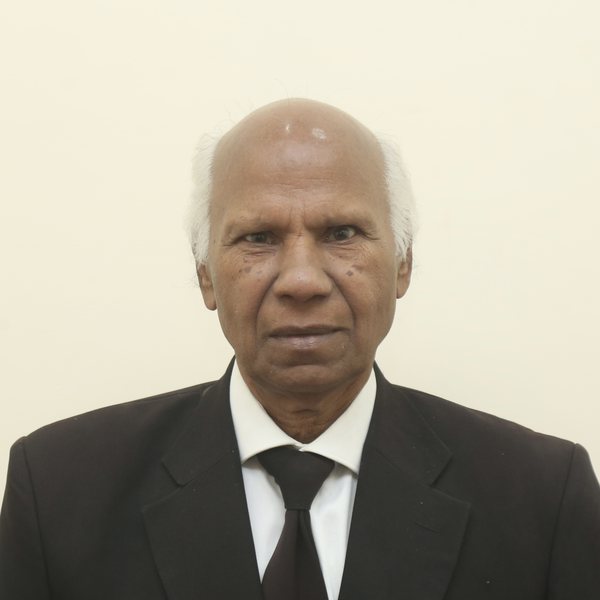
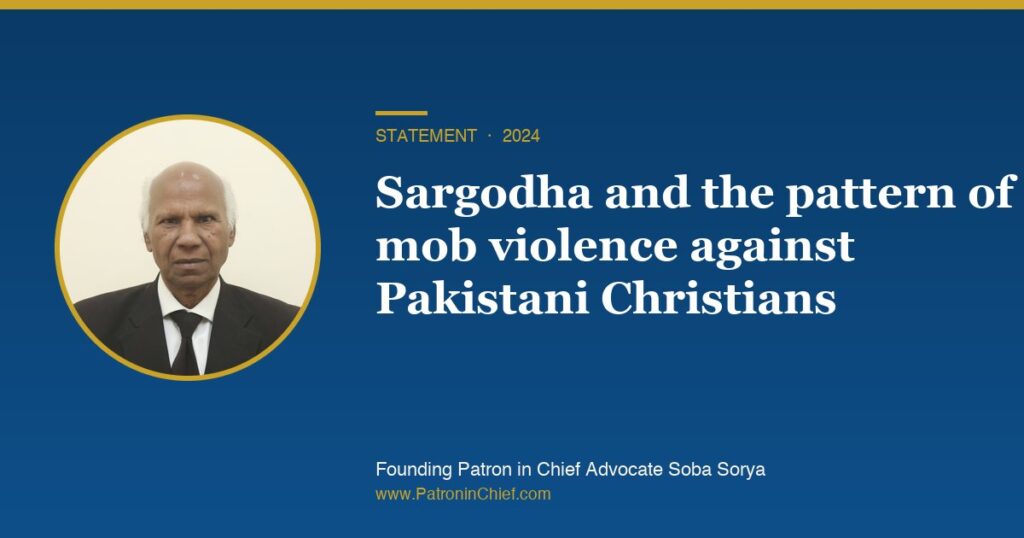
— Founding Patron in Chief Advocate Soba Sorya, Senior Advocate High Court, Christian Lawyers Alliance Pakistan (CLAP)